
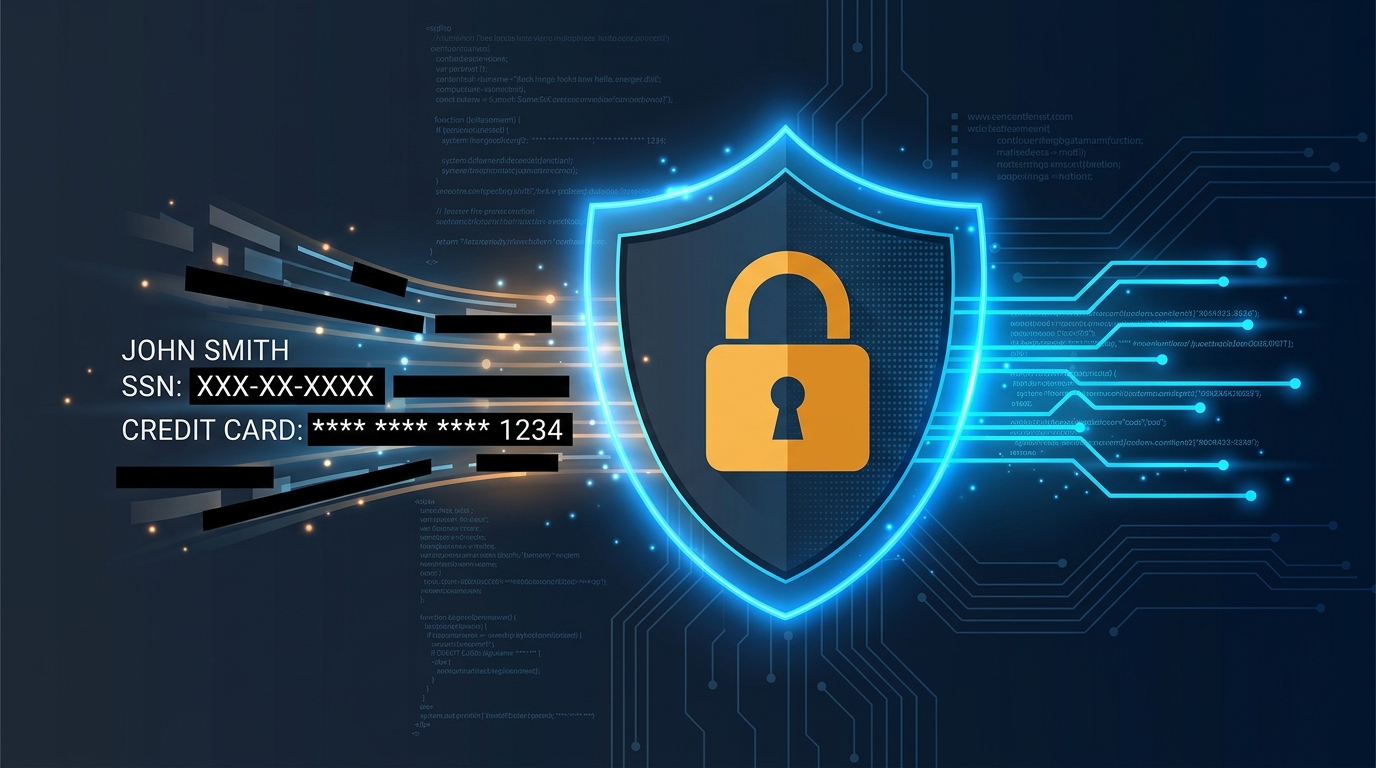
Every time someone pastes a customer email into ChatGPT or runs a support ticket through an AI summary tool, sensitive data leaves the building. Names. Emails. Social Security numbers. Credit card numbers. Medical records.
Most businesses don't think about it. They should.
HIPAA, GDPR, and NIST 800-171 all have clear rules about how personally identifiable information gets handled. None of those rules carve out an exception for "but we were just using AI to help."
The risk is real. An employee pastes a patient intake form into an AI assistant. A developer feeds production logs with customer data into a code analysis tool. A sales rep drops a prospect list into an AI email writer. Every one of those is a potential compliance violation.
The Tool That Can Help
Microsoft recently open-sourced a tool called Presidio that tackles this head-on. It detects and anonymizes PII before it ever reaches the model. Names get redacted. Credit card numbers get masked. Medical record identifiers get stripped. The data still flows, but the sensitive parts stay behind.
It supports text, images, and structured data. It runs on Python, Docker, and Kubernetes. It handles standard regex patterns and NLP-based detection. It even processes DICOM medical images for healthcare organizations.
Is it perfect? No. Automated detection has limits, and Presidio's own documentation says additional protections should be in place. But it is a solid first layer.
This isn't a new category of risk, either. We covered how employees use unauthorized AI tools with customer data and the compliance exposure that creates — the Presidio approach is exactly the kind of technical control that bridges the gap between "we have a policy" and "we have enforcement."
What Matters for Your Business
If you are using AI tools (and you probably are), you need a PII strategy. Not next quarter. Now.
A few starting points:
- Audit your AI touchpoints. Where does data enter an AI system? Every one of those is a potential leak.
- Add a detection layer. Presidio is one option. There are others. The point is to filter before data hits the model.
- Train your team. Most PII leaks through AI are not malicious. They are someone trying to be productive without thinking about what they are sharing.
- Document your controls. When the auditor asks how you protect PII in AI workflows, "we told people to be careful" is not an answer.
Documentation matters as much as the controls themselves. For organizations pursuing CMMC compliance or navigating FTC Safeguards Rule requirements, demonstrating that you have a defined process for handling data in AI workflows is the difference between passing an audit and explaining a gap. Our guide to the FTC Safeguards Rule for small businesses covers what auditors actually look for.
This Is Not a Future Problem
Shadow IT already proved that employees will use tools that make their jobs easier, with or without approval. AI tools are the same dynamic at higher speed and higher data volume. The shadow IT crisis showed that the risk almost never starts with bad intent — it starts with convenience. A PII detection layer removes the dependency on individual judgment calls.
This is a today problem. Every business using AI tools needs to get ahead of it.
Take Action
Knowing your AI exposure starts with knowing what's running in your environment. Unauthorized tools, shadow data flows, and uncontrolled AI integrations all show up as attack surface — and compliance gaps.
Oscar Six Security's Radar gives small businesses and MSPs continuous vulnerability scanning for $99 — surfacing the misconfigurations and unsanctioned services that put your data at risk before regulators or attackers find them first.
Focus Forward. We've Got Your Six.